Most drivers learn one rule when it comes to their engine maintenance: get an oil change every 3,000 miles. It’s simple, easy to remember, and… mostly outdated.
The truth is a little more detailed, and knowing it could save you money while keeping your engine in better shape. Your oil change interval is unique to you, your vehicle, and its many conditions.
Here’s what every driver needs to know:
- Why the 3,000-mile rule is no longer an accurate guide
- The factors that actually determine how often you need fresh oil
- How your driving habits affect your engine
- What to look for when searching for a reliable oil change nearby
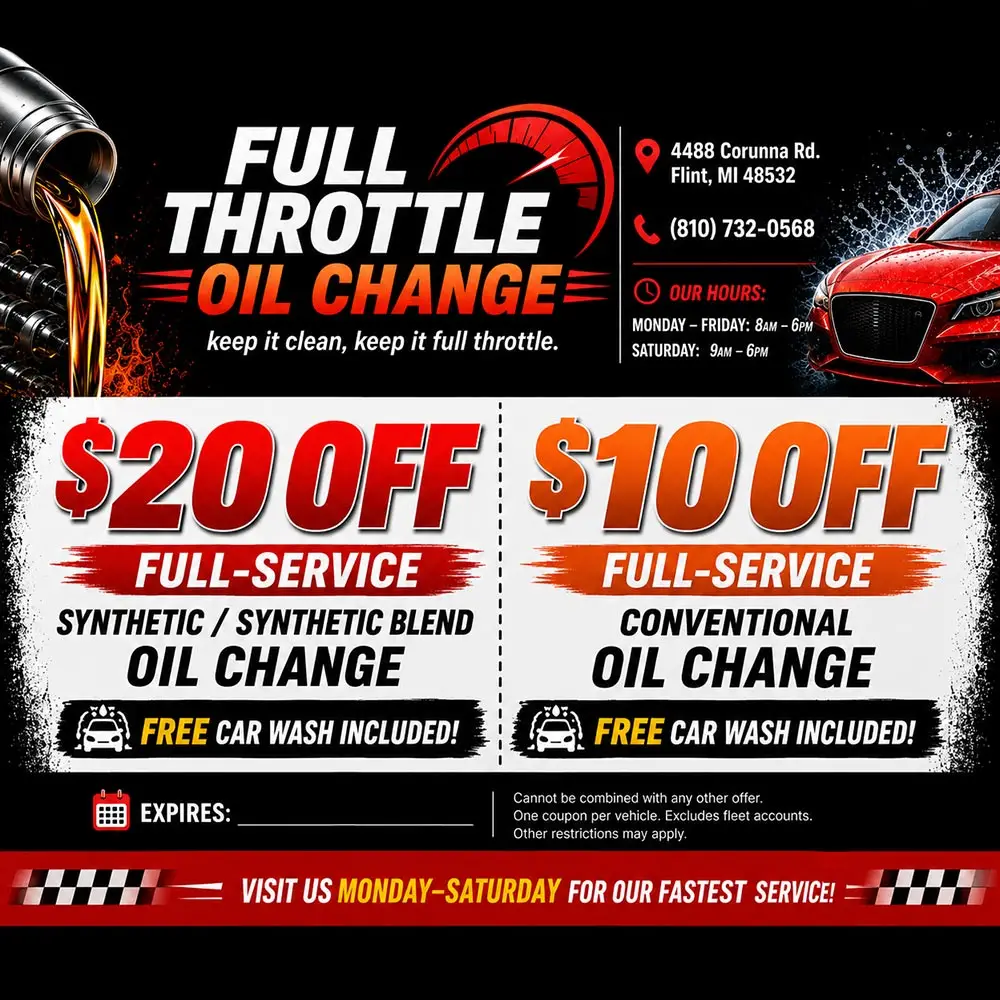
At Full Throttle Oil Change & Car Wash, we help Genesee County drivers make smart, informed decisions about their vehicles. Contact us today to find out what your car actually needs!
Why the 3,000 Mile Rule No Longer Applies
This guideline made sense decades ago. Older engines and conventional oil formulas broke down quickly. Modern engines and the latest oil technology have changed that significantly.
Most newer vehicles can go 5,000 to 7,500 miles between services. Some can go even longer with full synthetic. Following the old rule on a modern car isn’t dangerous, but it certainly will cost you more than necessary.
Here’s what actually determines your interval:
1. The Type of Oil Your Engine Uses
Conventional, synthetic blend, and full synthetic oils all perform differently. Full synthetic lasts longer and handles temperature extremes better. It costs more upfront, but it extends your protection and offers stronger engine protection.
Conventional oil degrades faster. It works fine for older engines designed around it, but it needs to be changed more frequently. Checking your owner’s manual is the best way to know which type your vehicle requires.
2. Consider How and Where You Drive
Not all miles are the same! Short trips, stop-and-go traffic, and cold weather starts are harder on your oil than highway miles because your engine works harder in those conditions. That means your oil breaks down faster.
Michigan drivers who deal with cold winters and city driving may need more frequent changes than the manufacturer’s standard interval suggests. Your driving pattern actually matters just as much as your mileage.
3. Pay Attention to Your Vehicle’s Age & Condition
Older engines can develop small leaks and burn oil more readily than newer ones. If your vehicle is older or has high mileage, your oil level and condition need more frequent monitoring.
Some high-mileage vehicles benefit from specially formulated oil designed to condition aging seals and reduce consumption. A quick inspection at your next oil change can help determine whether that applies to your car.
What Your Owner’s Manual Is Actually Telling You
Your owner’s manual is the most reliable source for your specific service interval. Most drivers never open it, but the information inside is tailored to your engine.
Manufacturer recommendations have evolved significantly. Many now suggest oil changes after 7,500 to 10,000 miles for vehicles using full synthetic oil. Some newer models even have oil life monitoring systems that calculate your interval based on actual driving conditions.
Following your manual’s guidance rather than an outdated blanket rule is the smartest approach. It keeps your engine protected without unnecessary trips to the shop.
Get an Honest Oil Change at Full Throttle in Flint, MI
The team at Full Throttle Oil Change & Car Wash is committed to keeping Genesee County drivers informed and their engines healthy. Located on Corunna Road in Flint, we provide fast, professional service you can count on.
When our experienced technicians assess your vehicle, you’ll feel confident knowing you’re getting an honest recommendation based on your car’s needs. Call (810) 732-0568 or contact us today to learn more!